
(949) 954-8181 Free Case Review No recovery, no fee.
(949) 954-8181 Free Case Review No recovery, no fee.


Many Californians assume severance pay is guaranteed after losing a job. It is not. What is wrongful denial of severance, then? It is the unlawful withholding of severance pay you are legally owed, whether through a contract, a written policy, or because your employer is using the denial to cover up an illegal termination. California employees face this situation more often than most realize, and the consequences go well beyond a missed paycheck. This article breaks down when severance denial crosses the legal line, what rights you have, and exactly what to do if you believe you have been wrongfully denied.
| Point | Details |
|---|---|
| Severance is rarely guaranteed by law | No federal law requires severance pay, but contracts and written policies can create enforceable obligations. |
| Denial can be wrongful in multiple ways | Breach of contract, retaliation, discrimination, and policy violations all make severance denial potentially illegal. |
| Deadlines are strict | Discrimination claims must be filed within 1 year; other wrongful termination claims within 2 years in California. |
| Never sign a release immediately | Reviewing any severance agreement with an attorney before signing can protect your right to pursue further claims. |
| Early legal advice changes outcomes | Consulting an attorney early gives you real leverage to negotiate a better settlement or file a successful claim. |
Severance pay is compensation an employer provides to an employee upon termination, typically tied to length of service or position level. It sounds like a standard benefit, but the legal reality is more complicated than most employees expect.
No federal law requires severance pay under the Fair Labor Standards Act. The WARN Act does require employers with 100 or more employees to give 60 days’ notice before mass layoffs, and failure to do so can result in back wages. But that is not the same as a severance package. True severance pay, the kind that cushions your transition after termination, remains entirely voluntary at the federal level.
That said, voluntary does not mean optional in every situation. Implied contractual obligations or written handbook policies can create enforceable severance rights even without a formal contract. If your employee handbook states that workers with five or more years of service receive two weeks of pay per year upon termination, that language may be legally binding. The same applies to union collective bargaining agreements and individually negotiated employment contracts.
Why do employers offer severance at all if they are not required to? The answer is strategic. Employers weigh potential legal claims like discrimination or retaliation when deciding whether to offer severance. A severance package almost always comes with a release of claims, meaning you agree not to sue in exchange for the money. That release is worth something to the employer, which is exactly why you should treat it as a negotiating tool rather than a take-it-or-leave-it offer.
Here is what typically creates a severance obligation in California:
Pro Tip: Pull out your offer letter, employment contract, and any employee handbook you received when you were hired. If any of those documents mention severance, you may have a legally enforceable right to it regardless of whether your employer now claims otherwise.
Understanding what is wrongful denial of severance requires separating two distinct situations. The first is when an employer simply never promised severance and does not pay it. That is legal. The second is when an employer had a legal obligation to pay severance and refused, or when the denial itself is tied to illegal conduct. That is where wrongful denial begins.
The most direct form of wrongful denial is breach of contract. If your employment contract, handbook, or written policy promised severance and your employer refuses to honor it, you have a breach of contract claim. California courts take written employment policies seriously, and a clear policy can be just as enforceable as a signed agreement.

The more complicated and often more valuable situation involves severance denial connected to wrongful termination. California wrongful termination claims can be based on discrimination, retaliation, breach of contract, or public policy violations. When an employer fires you for one of these illegal reasons and then withholds severance, the denial becomes part of a larger pattern of illegal conduct. In these cases, the severance issue and the termination issue are often litigated together.
Here is a breakdown of the most common legal grounds for claiming wrongful denial of severance:
At-will termination does not block a wrongful termination claim if the employer’s true motive was illegal. Courts look past the at-will label when there is evidence of discriminatory or retaliatory intent. That means even if you were told you were fired “without cause,” the real reason behind the firing matters enormously.
Filing deadlines are critical and unforgiving. Discrimination-based claims must be filed within one year of the termination. Other wrongful termination claims carry a two-year deadline. Miss either window and you permanently lose the right to pursue those claims.
Pro Tip: Do not wait to see if things resolve on their own. The clock starts running the day you are terminated, not the day you decide to take action. Contact an attorney as soon as you suspect wrongful denial.
Knowing your rights is only useful if you act on them. If you believe you are facing illegal severance denial, the following steps give you the best chance of protecting your interests and maximizing your recovery.
Start by gathering every document that touches on your employment relationship. This includes your offer letter, employment contract, employee handbook, any written communications about your termination, and any prior documentation of your performance or conduct. Pay particular attention to anything that mentions severance, benefits upon separation, or the terms of your departure.
Next, write down everything you remember about the circumstances of your termination. Who told you? What reason was given? Were other employees terminated around the same time, and did they receive severance? Did anything unusual happen in the weeks before your firing, such as a complaint you filed or a request for medical leave? These details matter more than most employees realize, and memory fades quickly.
Here is a practical action checklist:
Workers over 40 get at least 21 days under the Older Workers Benefit Protection Act to consider a severance agreement, and they have 7 days to revoke after signing. Even if you are under 40, you are not required to sign immediately. Taking time to consult an attorney before signing is not just advisable. It is often the difference between accepting a lowball offer and recovering what you are actually owed.
Initial severance offers frequently understate the true value of your potential claims. An attorney can assess whether your situation involves wrongful termination, discrimination, or other claims that significantly increase what you should be negotiating for. Early legal advice dramatically improves outcomes in severance disputes, particularly when the denial is tied to illegal conduct.
Pro Tip: Treat the severance negotiation as a business transaction, not a personal confrontation. Your employer’s legal team is already thinking about liability. You should be too.
Losing severance does not just cost you the payout itself. It can also affect your unemployment insurance eligibility in ways that compound the financial damage.
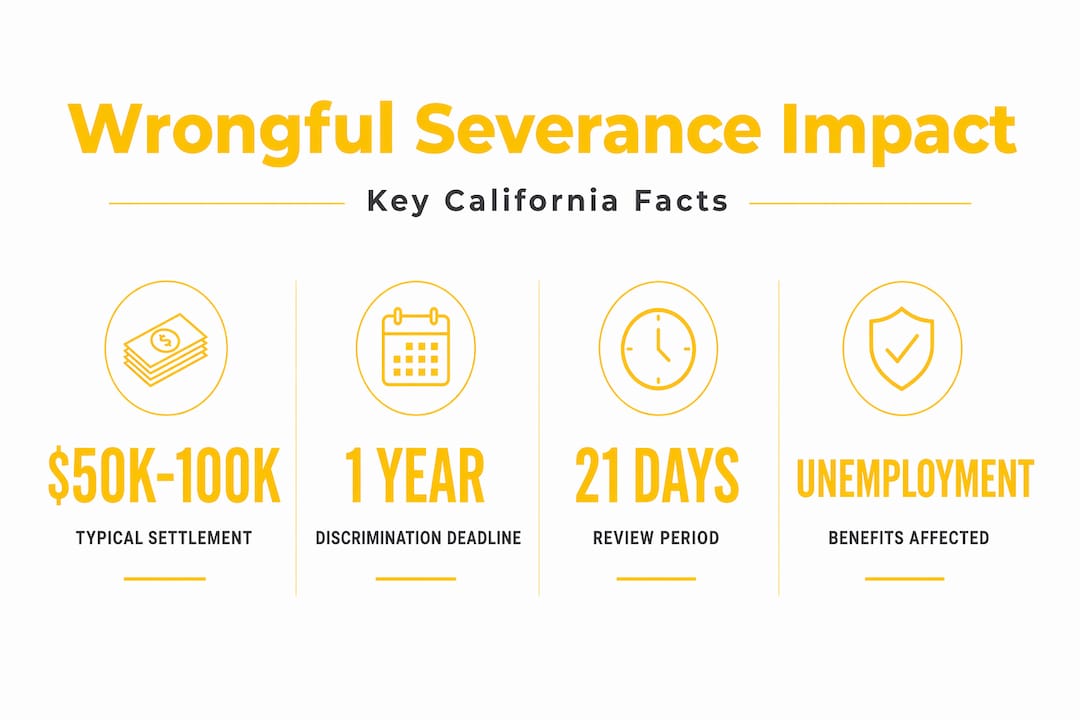
Severance pay may reduce or delay unemployment benefits depending on state rules, and employees must report all severance payments. California uses specific rules that determine when and how severance affects your eligibility window. If you receive a lump-sum severance payment, it may be allocated across weeks, potentially delaying when your unemployment benefits begin.
The table below compares how different state models handle severance and unemployment, with California’s approach highlighted.
| State model | How severance affects unemployment | California’s approach |
|---|---|---|
| No impact | Severance does not affect benefits at all | Not California’s model |
| Lump-sum disqualification | Entire benefit period delayed by lump sum | Partially applies in California |
| Prorated allocation | Severance spread across weeks, delaying benefits | Used in some California cases |
| Weekly allocation | Severance treated as wages week by week | Applies in certain situations |
States vary widely in how they treat severance pay in relation to unemployment. California’s rules are nuanced enough that getting this wrong can cost you weeks of benefits you would otherwise receive.
The financial stakes extend beyond unemployment. Wrongful termination settlements in California typically range from $50,000 to $80,000, and can include back pay, front pay, and punitive damages in discrimination cases. When severance denial is part of a wrongful termination claim, the total recovery can be substantially higher than the severance amount alone. Understanding the full picture of what you are owed is why legal consultation is so valuable before you accept any offer or sign any release.
I have seen this pattern repeat itself more times than I can count. An employee gets terminated, receives a severance offer with a release attached, and signs it within a few days because they are scared, financially stressed, or simply do not know they have other options. Months later, they learn that a colleague in the same situation negotiated three times as much. Or worse, they discover they had a legitimate wrongful termination claim that the release just wiped out.
The biggest myth I encounter is that severance is a gift from the employer. It is not. When an employer offers severance, they are buying something: your silence and your waiver of legal claims. That means the offer reflects what they think your claims are worth to them, not what those claims are worth to you.
What I have learned from representing California employees is that the employees who do best are the ones who slow down. They do not sign anything for at least a few days. They pull their documents together. They make one phone call to an attorney before making any decisions. That single step changes everything, because it shifts the power dynamic. The employer’s legal team already knows your potential claims. You should too.
If you were denied severance and you suspect the reason is connected to a complaint you made, a protected characteristic, or a policy your employer does not want scrutinized, that is not a coincidence worth ignoring. Courts look at employer motivation in wrongful termination cases, and what looks like a routine layoff often reveals something far more deliberate under examination.
If you are a California employee dealing with severance pay denial or suspect your termination was illegal, Optimum Employment Lawyers is built for exactly this situation. The firm works exclusively on the employee side, which means every strategy, every negotiation tactic, and every legal argument is designed to maximize your recovery, not protect an employer’s bottom line.
The team at Employees-lawyer offers free consultations to evaluate your claim and works on a contingency basis, so you pay nothing unless you win. Whether your situation involves a severance agreement dispute, a wrongful termination connected to discrimination or retaliation, or a denied package that violates your written employment contract, the firm has the track record to back it up. Their results include a $2.2 million class action settlement and significant individual recoveries across wrongful termination and discrimination cases.
Do not let a deadline pass or a bad agreement lock you out of what you are owed. Reach out to Optimum Employment Lawyers today for a free, confidential case evaluation.
Wrongful denial of severance occurs when an employer refuses to pay severance they are legally obligated to provide, whether through a contract, written policy, or because the denial is tied to illegal conduct like discrimination or retaliation.
No federal or California state law universally mandates severance pay. However, if your employment contract, employee handbook, or union agreement promises severance, that promise is legally enforceable.
Signing a severance release typically waives your right to sue for wrongful termination. This is why reviewing any agreement with an attorney before signing is critical. Workers over 40 have at least 21 days to consider the offer under federal law.
Discrimination-based claims must be filed within one year of termination. Other wrongful termination claims carry a two-year deadline. Missing these deadlines permanently forfeits your right to pursue the claim.
Yes, it can. California applies specific rules that may delay or reduce unemployment benefits depending on how severance is structured and paid. Employees must report all severance payments when filing for unemployment insurance.

© 2026 Optimum Employment Lawyers
Legal Disclaimer | Privacy Policy